

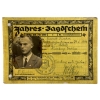
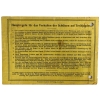
German Hunting License issued 1935
SKU: GERMAN HUNTING LICENSE 1935
Original/Reproduction: Original
Availability: In-stock
Manufacturer: N/A
Date Issued: 1935
Model: N/A
Size / Dimensions:
Materials / Construction: Paper
Condition: Very Good
Price: $100.00
Seller Type: WW2C
Seller ID: KC
Return Policy: 3-day inspection and return policy on used guns and accessories.
Description
Early Original German Hunting License issued in 1935.
History
During the Nazi regime, there was an emphasis on promoting a romanticized and idealized connection between the German people and their natural environment. Hunting was seen as a way to reconnect with the Aryan past and to cultivate a strong and self-sufficient citizenry. However, these policies were also used to advance propaganda, control resources, and serve the interests of the Nazi elite.
Some key points related to hunting during the Nazi era include:
-
Reich Hunting Law (Reichsjagdgesetz): This law was enacted in 1934 and consolidated hunting regulations across Germany. It aimed to centralize control over hunting rights and game management. It also defined who was eligible to hunt and emphasized the role of hunting as a means of preserving the health of forests and wildlife.
-
Hermann Göring and Hunting: Hermann Göring, one of the prominent Nazi leaders, was an avid hunter. He held a significant influence over hunting policies and regulations. Göring's personal interests often played a role in shaping hunting laws and practices.
-
Hunting as Propaganda: The Nazi regime used hunting as a propaganda tool to project an image of a strong and united Germany. Images of leaders like Göring participating in hunts were widely circulated to reinforce the idea of a harmonious relationship between the German people and the land.
-
Control and Privilege: Hunting became a privilege primarily available to the Nazi elite and those deemed racially or politically acceptable by the regime. This reflected the broader theme of discrimination and exclusion that characterized Nazi policies.
-
Wildlife Management: While the Nazi regime did emphasize the preservation of wildlife and forests, these efforts were often secondary to political and military priorities. Resources and manpower were diverted to other objectives, which sometimes led to unsustainable practices.
-
Post-War Reforms: After World War II and the fall of the Nazi regime, Germany underwent significant reforms in terms of wildlife management and conservation. Many of the Nazi-era hunting laws were reformed to align with modern conservation principles.
