
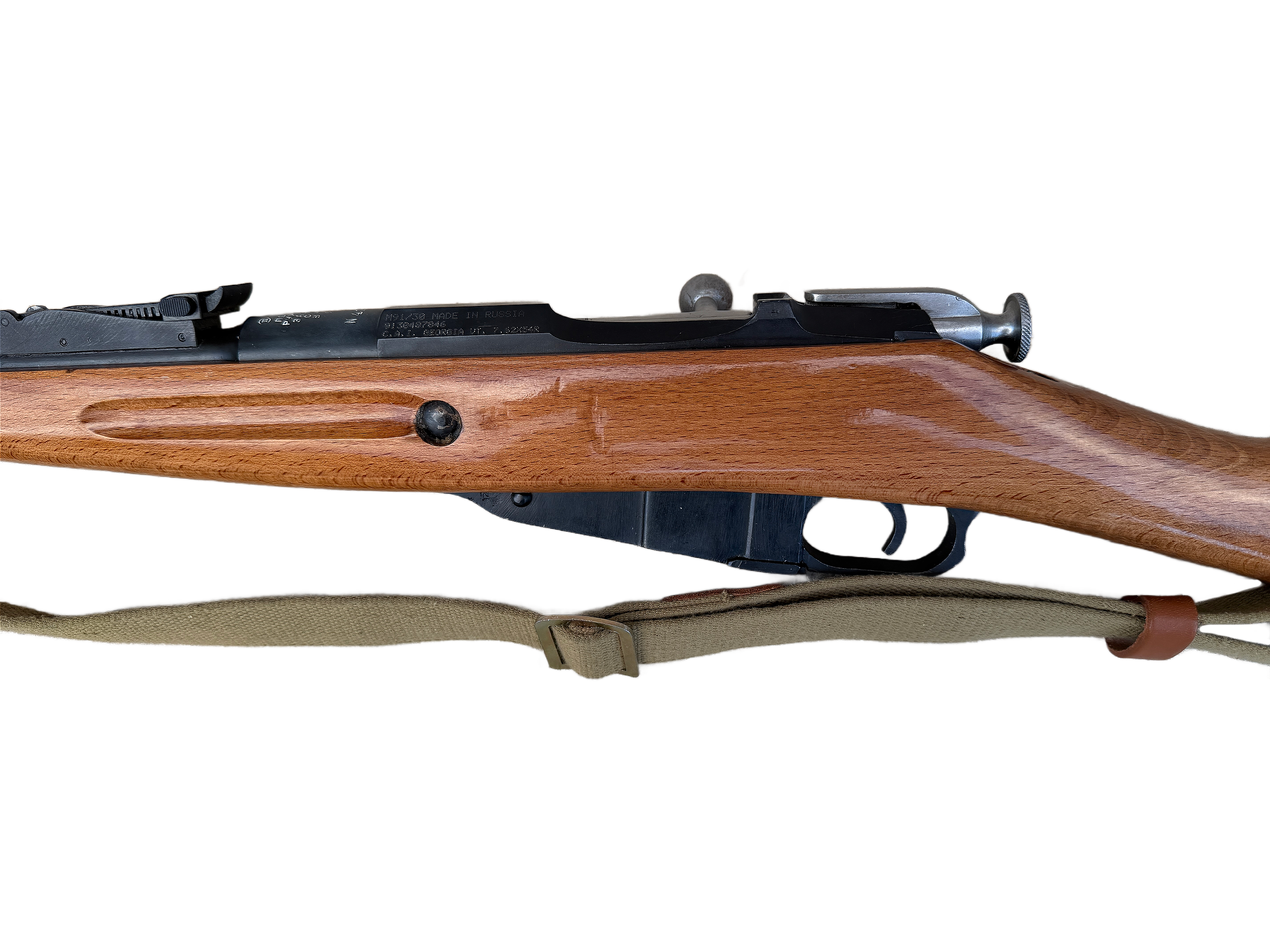


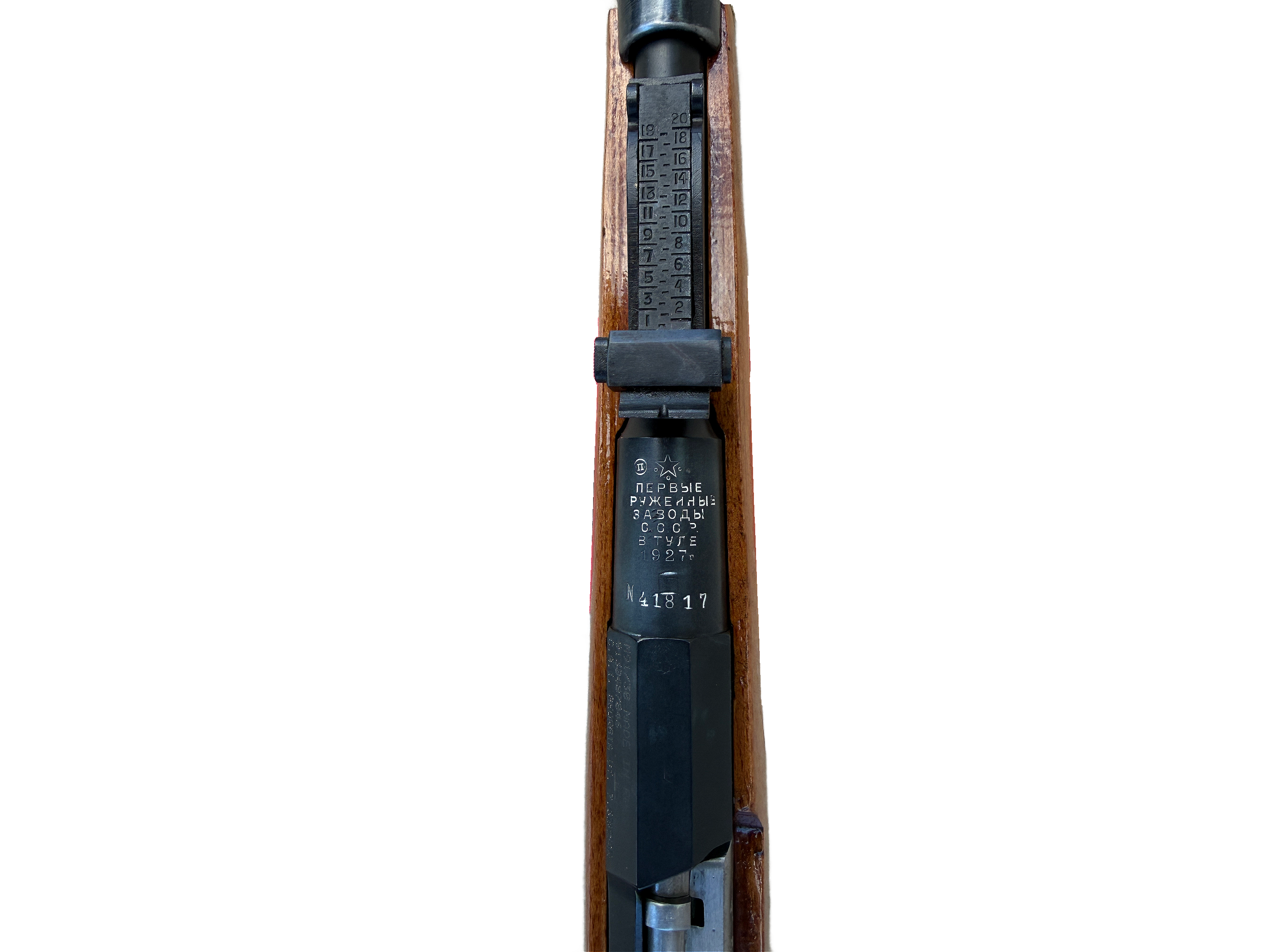
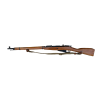
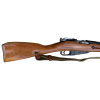
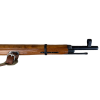
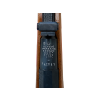
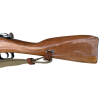
WW2 Russian 1927 Model 91/30 Caliber 7.62X54R Mosin Nagant Rifle
SKU: 525
Original/Reproduction: Original
Availability: In-stock
Manufacturer: Tula Arsenal
Date Manufactured: 1927
Model: 91/30
Serial Number: 41817
Caliber: 7.62X54R
Capacity: : 5 Round
Barrel Length: 28.5
Total Length: 48.5 in
Weight: ~3.5–4.0 kg
Action: Bolt-action
Rate of fire: Entirely dependent on the skill of the operator
Sights: Hooded post front sight, and adjustable tangent rear sight with "U"-notched groove
Effective firing range: 300–500 m.
Magazine: 5 Round
Condition: 98%/Excellent
Mechanically: Excellent
Price: $995.00
Seller Type: Classification: C&R / FFL
Seller ID: JMW
Seller Code: PS-500
Return Policy: 3-day inspection and return policy on used guns and accessories.
Description:
This Original Russian 1927 Model 91/30 Caliber 7.62X54Rmm Mosin Nagant Rifle has Matching Serial Numbers. This stock has been professionally refinished and is in near mint condition. The bore is bright and has very good rifling.
This is an early-production Model 91/30 Mosin-Nagant rifle originally manufactured in 1927, during the first years of the Soviet Union’s sweeping modernization of its small-arms inventory. Transitional rifles from this period are highly desirable to collectors, as they represent the earliest configuration of the 91/30—built before the outbreak of World War II and often showing a blend of pre-war craftsmanship and later wartime updates.
The 1927 example reflects this pre-war attention to detail while retaining the rugged features that made the 91/30 one of the most widely used infantry rifles of World War II. Firing the hard-hitting 7.62x54Rmm cartridge, the rifle offered reliable accuracy, long-range capability, and robust performance in the harshest Eastern Front conditions. As the Soviet Union mobilized for war after 1941, rifles of this era were frequently refurbished to standardized 91/30 specifications and reissued to frontline troops, militia formations, and later to reserve units throughout the conflict.
History
The Mosin Nagant Model 91/30 was the primary service rifle of the Soviet Red Army throughout World War II and stands today as one of the most iconic battle rifles of the 20th century. Adopted in 1930 as a modernization of the earlier Imperial Russian Model 1891, the 91/30 incorporated numerous mechanical and ergonomic updates that made it better suited for mass wartime production and the brutal conditions of the Eastern Front.
Design & Development
The 91/30 retained the strong, reliable three-line Mosin bolt-action system but introduced several improvements over its predecessor. These included:
- Shortened barrel length for more manageable handling.
- Refined sights featuring metric graduations and a hooded front post for increased durability.
- Strengthened stock and handguard design to sustain heavy military use.
- Improved production efficiencies, critical for the Soviet Union’s vast and urgent mobilization during WWII.
Manufactured primarily at the Izhevsk and Tula arsenals, the 91/30 underwent numerous wartime simplifications, which shifted the rifle from pre-war high craftsmanship to rugged, utilitarian battlefield practicality. Even with these changes, the rifle remained exceptionally dependable, operating reliably in mud, snow, and the extreme cold of the Eastern Front.
Service in World War II
The Model 91/30 served as the backbone of the Red Army’s infantry forces. Carried by millions of Soviet soldiers, from conscripts to elite Guards units—the rifle saw action in nearly every major Eastern Front engagement, including Stalingrad, Kursk, Leningrad, and the final assault on Berlin.
Its strong receiver and consistent ballistic performance also made the 91/30 an excellent platform for sniping. Select rifles with above-average accuracy were converted into sniper variants fitted with PU, PE, or PEM optics, becoming the preferred weapons of legendary Soviet snipers such as Vasily Zaitsev and Lyudmila Pavlichenko.
Caliber 7.62×54R
Chambered in the powerful 7.62×54R cartridge—one of the longest-serving military rounds still in production today—the 91/30 delivered excellent range


