


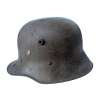
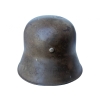
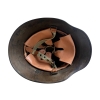
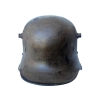
WW1 M17 Austro-Hungarian AW64 Helmet (Original)
SKU: 135
Original/Reproduction: Original
Availability: In-stock
Manufacturer: A. Westen Cilli Celie, Slovenia
Year Manufactured: 1917
Model: M17
Size: 64
Condition: Very Good
Price: $700.00
Seller Type: WW2C
Seller ID: JMW
Seller Code: 200
Return Policy: 3-day inspection and return policy on used guns and accessories.
Description:
Original, German WW1 M1916 STAHLHELM AW64 Helmet. Above the left ear interior of the apron of the shell has a stamped manufacturer's code and size AW 64, which indicates manufacture by A. Westen Cilli, located in Celie, Slovenia. This company produced shells in size 64 only during WWI. Size 64 is a medium size shell, which can accommodate size 56-58 liners. This size is somewhat harder to find, and more desirable to collectors.
History:
The Central Powers of Austria-Hungary used, manufactured and commissioned, variations of the World War One German Stahlhelm M16 design. The Austrian M1917 helmet was similar to the German M1916, but had a few variations including the chinstrap,, chinstrap rivets located higher up on the steel shell and variations in locations of markings among others.
Early Austrian helmets were supplied by Germany, the first shells supplied as the chinstrap rivets were mounted in a lower position. The Austrians fitted their own chinstrap bales, chinstraps and liner and painted them in Austrian Isonzo braun. These modifications were carried out with German machinery at the"Adolf Westen di Cilli factory, which is now Celije, in Slovenia.
Austro-Hungarian WWI Helmets Makers
There are only 9 known factories that produced helmets during WWI for the KUK. Unlike the Germans the Austrian pattern helmet are often found without factory stamps and heating lot codes. When the heating lot codes are present it is often on the outer top dome of the helmet instead of the inside. The following is a table of Manufactures codes of helmets produced by the Austrians. Several of these makers did not stamp the code into the shell of the helmet but rather marked them with an ink stamp. Therefore many Austrian shells will be encountered today that seem to have no maker mark as the ink stamp has worn off, but most will have rolling mill codes.


